VPN Explained: What It Is and How It Works
2026 Guide

Any device that's online exposes your activity to your internet service provider. Each search. Each download. All of it. That's why a growing number of people rely on virtual private networks, known as VPN, to keep companies from monitoring what they do on the internet.
There's a lot of confusion about VPN, so this guide clears it up: what a VPN is, how it works, why you might need one, and what it can do for you.
VPN Overview: Table of Contents

What is a VPN?
A VPN is an app that keeps your internet traffic private, whether you're on risky public Wi-Fi or on your own home network. This extra layer of protection stops others from watching what you do online, wherever you happen to be connecting from.
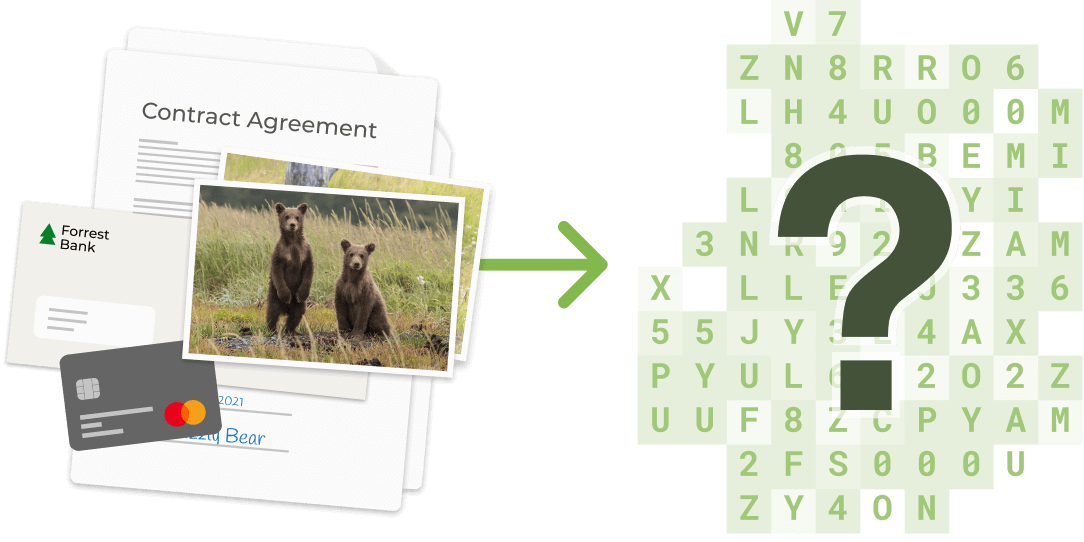
With TunnelBear, your data can't be read while it travels from you to its destination
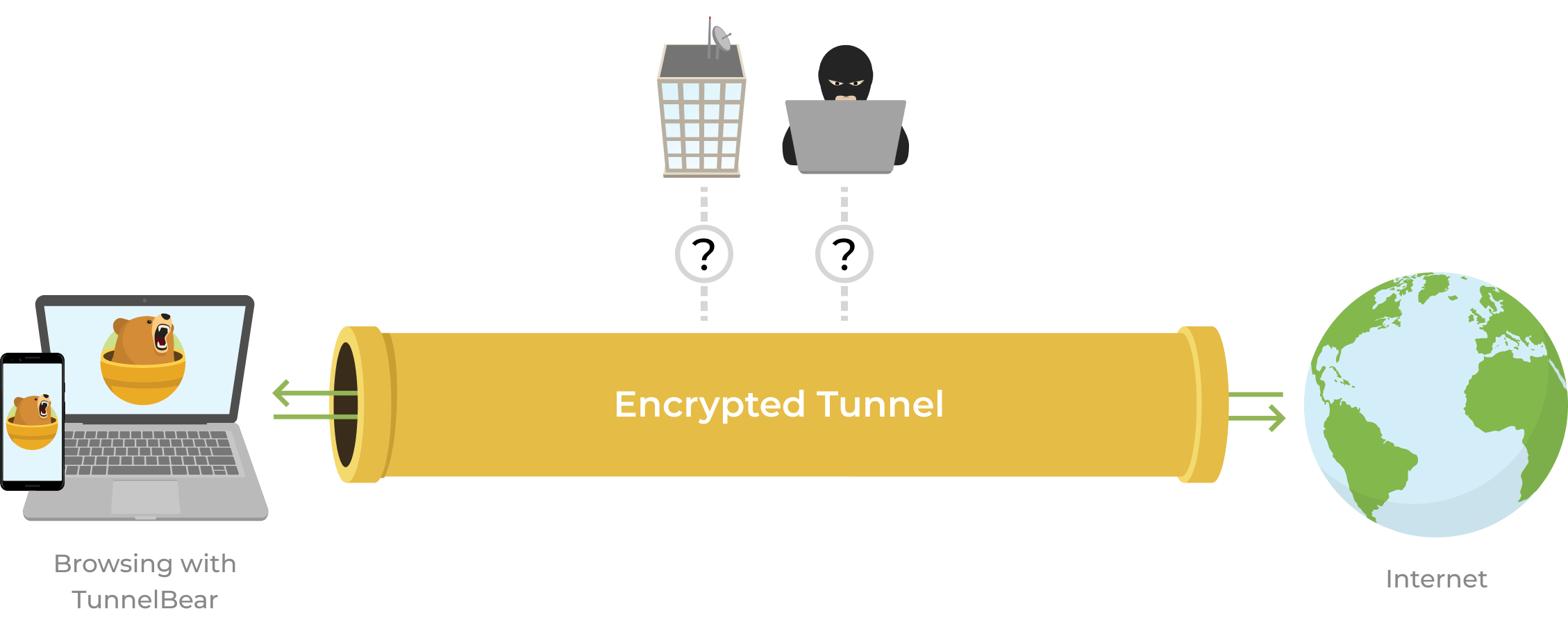
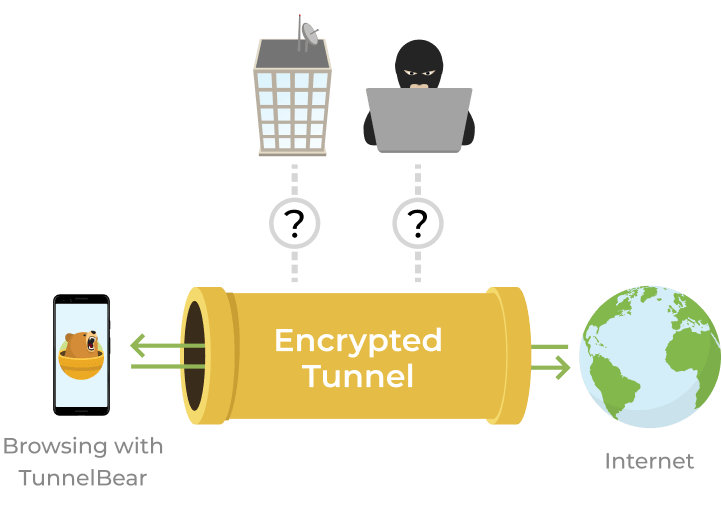
A virtual private network works by building an encrypted "tunnel", and every piece of data leaving your device passes through it on the way to the internet. Encryption scrambles words and files, such as text documents, into a coded form. Anyone who tries to open encrypted data without the password sees only meaningless noise.
“A VPN encrypts your internet connection so what you do online stays private on any network.”
When you connect to a VPN
Your browsing stays private, which makes it hard for anyone to follow you around the web
Your traffic appears to originate in a different country, so certain blocked websites open up
Everything you send and receive over the internet is encrypted, so that data stays private
Why do I need a VPN?
Everyone has their own reasons for needing a VPN. Some use one to get around app restrictions and keep in touch with family while travelling through countries with heavy censorship. Others rely on it to stay safe on public Wi-Fi. And some simply like knowing that their internet service provider can't see their browsing each time they go online.
The value of a VPN is only now becoming widely understood, much as antivirus once was. When hacks and viruses started making headlines, people saw how risky even opening a web page could be. Now the loss of privacy is the new "virus": nearly every device comes with some virus protection, yet hardly any offers protection for your privacy.
“A VPN is a must because it keeps you secure and safeguards your privacy.”
Want to give a VPN a try? Get TunnelBear today!
Top reasons people use VPN
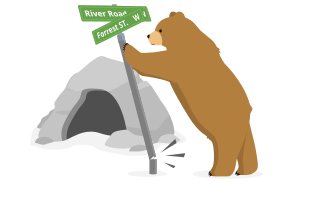
Hide your IP address
Stop websites and advertisers from learning your true location and identity.
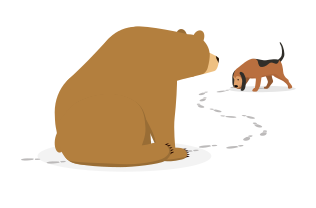
Stop tracking
Keep data brokers and ad networks from assembling a profile of how you behave.
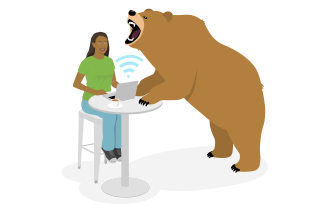
Secure public Wi-Fi
Stay protected on café, airport, and hotel networks.
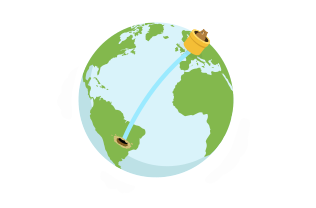
Access home content
Keep enjoying the services you love while you're abroad.
Streaming
Browse the open internet without geo-restrictions.
Beat censorship
Reach the open internet from countries that restrict it.
Travel safely
Shield sensitive data on hotel and airport Wi-Fi.
Personal privacy
Hide your browsing habits from your ISP.
P2P & file sharing
Send and receive files securely and privately.
What does a VPN do and how does it work?
Security
By encrypting your connection, a VPN keeps attackers from intercepting and reading your personal data. What they usually go after is passwords, payment card details and private messages.
Privacy
A VPN gives your online life an extra layer of privacy. Your ISP, employer or network owner can no longer keep a record of every site you open, and websites lose the ability to trail your IP address across the internet.
Access
A VPN opens the door to an open internet without restrictions. When you connect through servers in other countries, you can get past government blocks on news sites, social networks, games and any other sites you enjoy.
With TunnelBear
An encrypted tunnel shields your data from ISPs, network owners and hackers.
How do I install a VPN?


Download the app
You can get TunnelBear for PC, Mac, iPhone and Android.
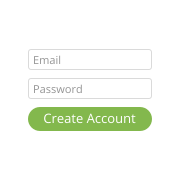
Create an account
Sign up with your email address and choose a password.

Connect
Press the button and you're connected to the VPN.
How do I use my VPN once it has been set up?
After setup, all you need to do is choose a country and switch the VPN on. It keeps running behind the scenes while you browse. The change you'll spot first is that sites which used to be out of reach now open for you.
Nearly every VPN provider runs servers in a range of countries, and that's the trick people use to get around censorship and unblock sites. If something you want is blocked where you live, connecting through a server in another country will normally let you reach it.
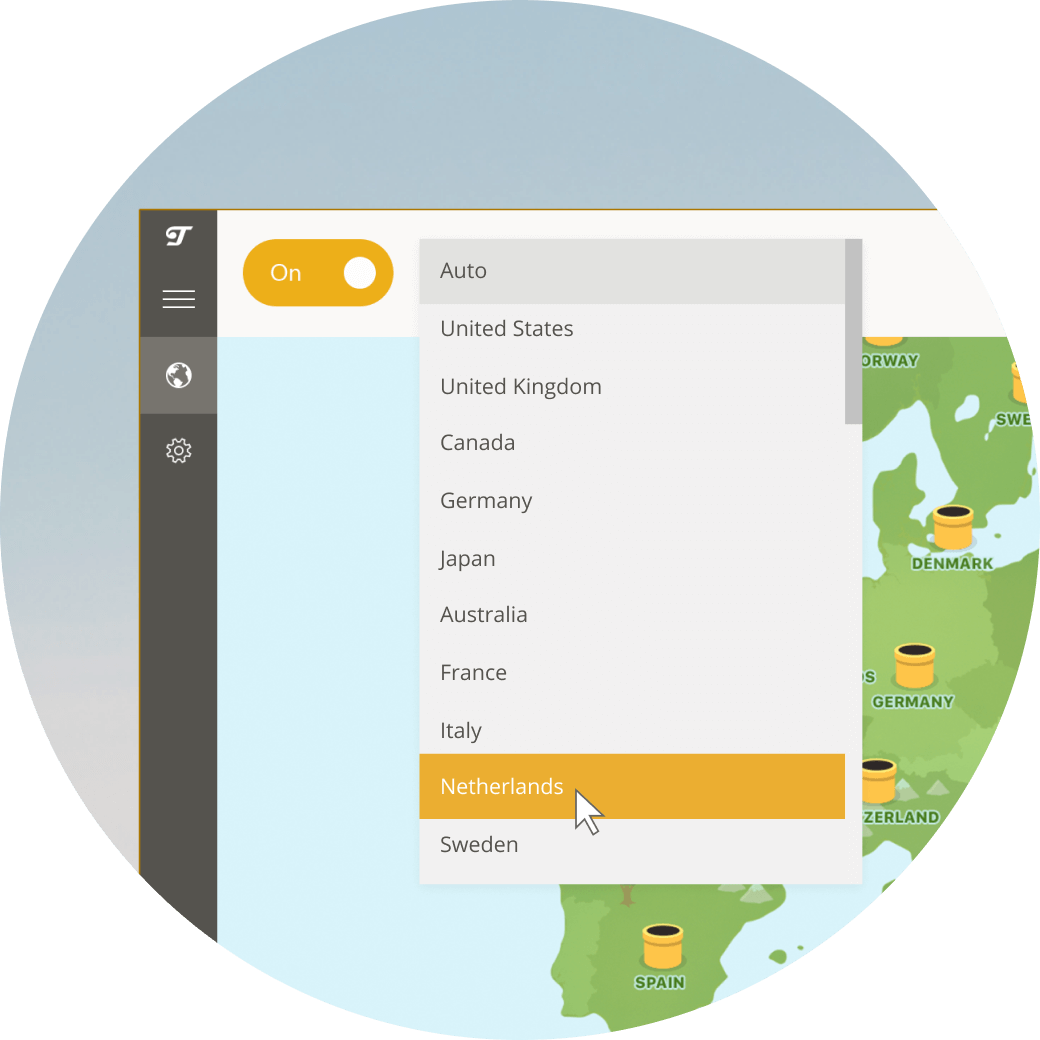
Pick a country, turn TunnelBear on, and you're done!
VPN FAQ
Yes. With the tunnel switched on, your browsing habits don't need to change at all. TunnelBear stays quietly in the background, and what most people notice is simply that sites which were previously blocked now open.
A VPN subscription runs a few dollars per month. Without one, the information gathered about you keeps being resold over and over to buyers you'll never meet, and once it's sold there's no way to take it back. For most people, that makes the price easy to justify.
When you're connected, the app displays a bear and a glowing tunnel. For a second check, open any IP-lookup website: it should name the country of the server you chose rather than the one you're really in.
We keep no activity logs at all — no record of the sites you open, of the IP addresses assigned to you, or of what your traffic contains. Our privacy policy spells this out in full.
Using a VPN is perfectly legal in the vast majority of countries. Only a few places limit it or require a licence, so it's wise to look up the local rules before you travel. Keep in mind that a VPN doesn't turn something illegal into something lawful.
Encrypting traffic costs a little extra processing, and your data takes a slightly longer route. On a modern broadband connection you'll rarely feel it, and choosing a nearby server keeps the effect as small as possible.
Nothing to hide doesn't mean nothing worth protecting. You shut the bathroom door, seal an envelope and keep your card details to yourself; encryption simply brings that same instinct to your internet connection.
No one tool can make a person fully anonymous. What a VPN does is eliminate a whole category of risk, namely snooping on the network itself, but it can't protect you if you give away your password or run malware. Pair it with sensible online habits.
Open an IP-checking tool and note the result both before and after you connect. When the location shown switches to the country you picked, your traffic is going through the tunnel.
A DNS leak means the requests that turn a domain name into an address slip out of the tunnel and land with your provider. Because TunnelBear sends every one of those requests through its own encrypted resolvers, leaks are prevented.
Our servers sit in 47 countries spanning the Americas, Europe, Africa and Asia-Pacific. Just choose a country, and the app connects you to the quickest machine there.
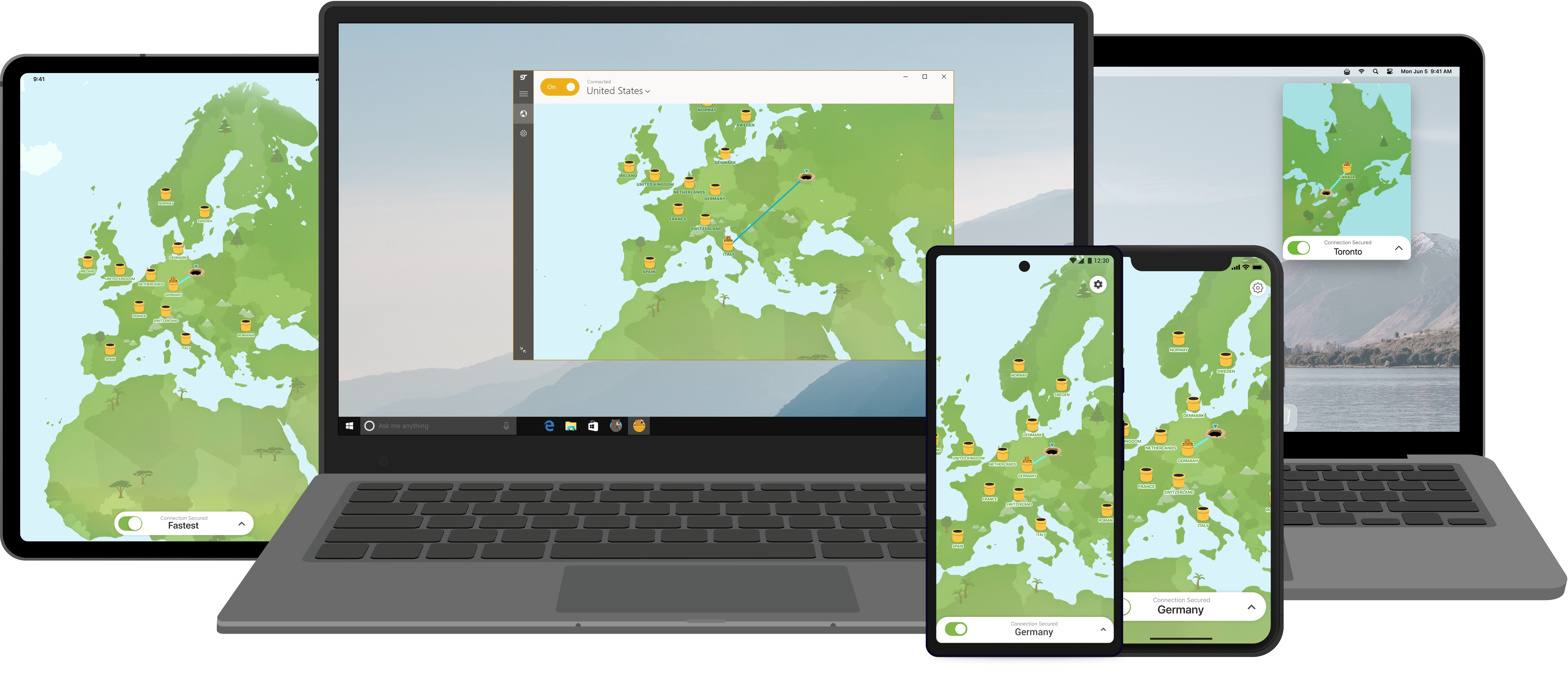
Protect your connection starting today.
TunnelBear quietly guards all of your devices from the background. Thanks to apps for phones, laptops and desktops, plus browser extensions, your data stays protected on whichever device you use and wherever you are.
TunnelBear doesn't log your usage or connection details, and it never will. We respect privacy as a Universal Human Right and stand up for it. Our Privacy Policy sets out where we stand on privacy and customer data.
Get TunnelBear